


I Am Dino
4.31.00 Reviews
App Specs
- Version
- 1.0.0
- Updated On
- License
- Free
- Downloads
- 1,000,000+
- Developer
- CozyTap Studio
- Categories
- Simulation
- Platform
- Android
Screenshots
 Analysis by AppCompare
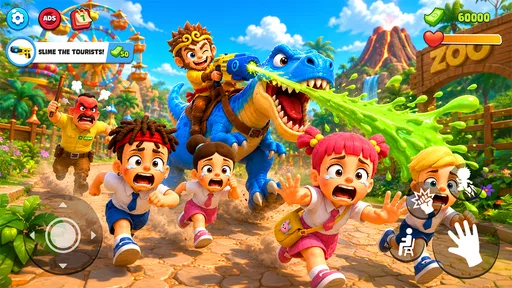
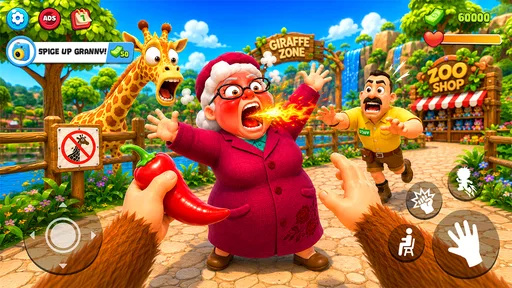
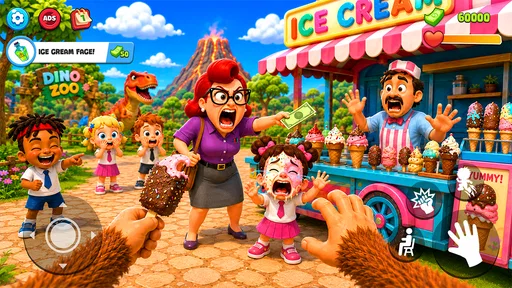
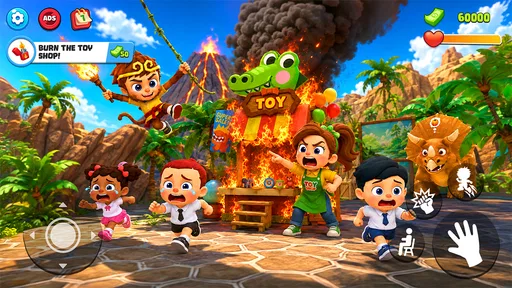
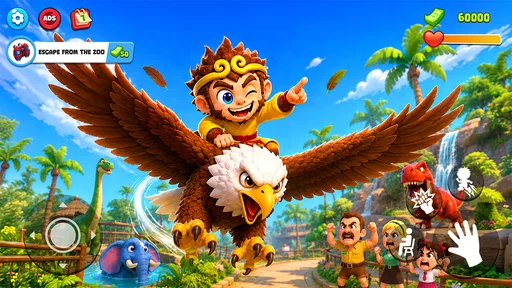
I Am Dino is an unusual little simulation game with a playful identity: instead of managing a farm, building a city, or running a shop, I step into the role of a troublemaking creature and look for ways to turn ordinary moments into small acts of chaos. Its store summary frames the experience around a mischievous monkey prankster, while the short description gives the game its compact name. That contrast is part of the charm, but it also means I approached it as a light, casual experiment rather than a deep dinosaur management simulator.
After spending time with it, my impression is that this is best suited to players who enjoy simple interactions, quick sessions, and the humor of seeing a harmless plan go slightly wrong. It is free, rated for Everyone, and developed by CozyTap Studio, so it has an accessible starting point for younger players and anyone who wants something easy to pick up. The game has also attracted more than a million installs and holds a 4.3 average, which suggests that its straightforward prank-focused idea has found a sizeable audience.
How the everyday play loop feels
The baseline workflow is refreshingly uncomplicated. I open the game, look at the situation in front of me, and experiment with the available interaction rather than preparing a long strategy. That makes it a good choice for a short break: I do not need to remember a complicated economy, maintain several characters, or study a large map before I can enjoy the next few minutes.
The strongest part of the experience is the immediate feedback. A prank game depends on timing and reaction, and the appeal comes from trying something, seeing how the scene responds, and deciding whether to repeat it differently. This gives the game a playful trial-and-error rhythm. I found myself paying more attention to the order of actions than I expected, because a small change in approach can make a simple situation feel more satisfying.
That simplicity is also the first important trade-off. Players who expect a full simulation with detailed progression, resource planning, or a long-term management layer may find the experience too light. The category label points toward simulation, but this is not the kind of simulation I would compare with a serious construction or life-management game. It is closer to a compact interactive playground where the fun comes from the scenario and the reaction.
A realistic use case is a short evening break when I want something more active than scrolling but less demanding than a strategy game. I can play without committing to a long session, test a mischievous idea, and put the phone down. It also works as a simple shared activity with a child, provided an adult is comfortable with the prank theme. Because the content rating is Everyone, the tone is positioned for a broad audience rather than mature humor or intense action.
I would not choose it for a long commute if I wanted a game with a strong sense of permanent progress. The short-form design makes it easy to start, but it can also make the experience feel repetitive once the novelty of a particular situation fades. My advice is to treat each session as a small burst of experimentation instead of expecting a large campaign.
Worth Reading Before You Choose

EA SPORTS FC Mobile 26 Is a Bigger Football Game, but It Takes Time

Flipboard Shows What News Apps Must Do Beyond the Feed

Switching to Android Auto Means Rethinking Your Driving Routine

Google Calendar Makes a Crowded Week Easier to Manage

Ludo King Makes the Most of the Minutes Between Plans

Baby Panda World Brings Quick Play to Modern Phones, but Its Game Library Feels Busy
What I check before settling into a session
There are a few practical habits that make the game easier to enjoy. First, I take a moment to understand what the current scene is asking me to notice. In a prank-focused game, rushing directly toward the most obvious object can be less rewarding than looking at the whole situation. I try to identify the character, object, or moment that appears to be the intended source of interaction, then test the least disruptive option before trying something more mischievous.
Second, I avoid tapping randomly for too long. Random input can reveal something, but it is not a reliable method for learning a scene. I prefer a repeatable sequence: observe the layout, try one interaction, watch the response, and then change only one part of the attempt. That turns each failure into useful information instead of making the session feel like guessing.
Third, I give the game a fair chance on a device that meets its basic requirements. The current version is 1.0.0 and supports devices starting from Android 7.1, so it is not limited to only recent hardware. Even so, older phones can vary in responsiveness, and a touch-based game built around quick reactions is more enjoyable when taps register consistently. I also close unnecessary apps when I want the smoothest possible session, especially on an older device.
Settings and device habits worth checking
I do not treat the settings menu as something to ignore just because the game is casual. Before playing around with the prank scenarios, I check the available sound and notification controls. Audio can make reactions more amusing, but it can also become distracting in a quiet place. If I am playing around other people, I lower the volume rather than letting the game interrupt the room.
I also pay attention to how the game behaves when I rotate the phone, lock the screen, or switch briefly to another app. Short games invite interruptions, so a good personal habit is to finish a small interaction before leaving rather than abandoning the game in the middle of a sequence. This is not a hidden feature or a guarantee of saved progress; it is simply a way to reduce frustration when using a casual game in real life.
For families, the most useful preparation is not a complicated configuration but a clear expectation about how the prank theme should be understood. I would describe the actions as cartoon-style mischief inside a game, not as instructions for bothering real people. That distinction matters when a younger player is watching or playing. The Everyone rating makes the game approachable, but parental guidance is still sensible when the child is very young or easily imitates characters.
Another useful habit is to keep the first session exploratory. I do not immediately decide that every interaction must be optimized. I look for the game’s rhythm, notice whether the humor works for me, and see how much variety the situations offer. This helps answer an important question a store page cannot: whether the game’s central joke remains entertaining after the first few attempts.
Faster patterns for repeat play
Once I understand a scene, I use a faster pattern instead of starting from scratch. I remember the general location of the important interaction, approach it with the same first step, and then alter the follow-up. This is more efficient than tapping every visible element and gives me a better sense of what actually changes the outcome.
The key is to change one variable at a time. If I alter the object, timing, and order of actions together, I cannot tell which choice mattered. By keeping two parts consistent and changing the third, I build a small mental map of the scene. That is a surprisingly useful technique for a game this simple, because it turns casual play into a light puzzle-solving exercise without making the experience feel like homework.
I also recommend using short attempts rather than repeating a failed sequence immediately. After an unsuccessful prank, I pause and look again at the surroundings. Sometimes the more obvious action is only a setup, while the satisfying result comes from interacting with something nearby afterward. I cannot promise that every scene follows the same structure, but approaching it this way helps avoid the most common source of friction: repeating the exact same input and expecting a different response.
For players sharing the game with friends or family, taking turns can make the limited mechanics feel more social. One person observes while the other interacts, then they swap roles. This works particularly well when a scene contains a visual clue that is easy to miss during rapid tapping. It also changes the goal from simply finishing an interaction to discussing why a particular attempt worked.
Experienced users should resist the urge to rush through every available moment. The faster pattern is not “tap as quickly as possible”; it is “recognize the situation quickly, then act deliberately.” That distinction preserves the humor. If I treat every screen as a speed test, I lose the small surprise that makes the prank concept enjoyable in the first place.
Where the design reaches its limits
The biggest limitation is depth. I Am Dino has a clear central idea, but a clear idea is not the same as a large system. Players looking for extensive customization, a detailed progression tree, competitive rankings, or a simulation that evolves over many hours should look elsewhere. A traditional life simulator offers more control over routines and relationships, while a city builder provides more meaningful long-term planning. This game is better when I want a quick interactive joke than when I want a second virtual life.
Variety is another point to consider. A prank mechanic can be entertaining for a while, but it depends heavily on fresh situations and reactions. If I play continuously for too long, the basic interaction pattern may start to feel familiar. The sensible solution is to use it in short sessions and return when I am in the mood for light experimentation. Treating it like an all-day game would expose its limits faster.
The game’s identity may also confuse some players. The name suggests a dinosaur experience, while the store summary describes a monkey prankster. I would not install it expecting a conventional prehistoric simulation with dinosaur care, habitat design, or scientific content. The name is memorable, but the actual appeal is the mischievous character-driven interaction, so expectations should be set accordingly.
There is also a difference between accessibility and sophistication. The free price and broad age rating remove two common barriers to trying a game, and the relatively modest Android requirement makes it reachable for many device owners. However, an easy entry point does not automatically mean that every player will find lasting challenge. I see the low barrier as a strength for casual use, but a limitation for people who want increasingly complex decisions.
The current version, 1.0.0, reinforces my cautious approach to long-term expectations. I judge the game on what it offers as a compact experience today rather than assuming a future roadmap or promising that new systems will appear. That is a healthier way to evaluate it: enjoy the existing prank loop, and do not buy into imagined features that are not part of the current package.
Who should play it, and who should skip it?
I would recommend it to someone who likes playful simulations, quick touch interactions, and harmless mischief. It is especially suitable for a player who wants a free game that can be understood without a tutorial-heavy commitment. The Everyone rating also makes it a reasonable candidate for family play, with the usual common-sense supervision for younger children.
I would be more selective for someone who needs a strong narrative, deep character development, or a substantial sense of achievement. If your favorite simulation games are built around optimizing production chains, designing elaborate spaces, or managing a growing community, this will probably feel too narrow. A puzzle game may also be a better choice if you want carefully structured logic rather than humorous experimentation.
Players with older Android phones can try it because the minimum operating system is Android 7.1, but I would still keep expectations realistic about performance on aging hardware. Touch response matters more here than it would in a turn-based game. If the phone regularly struggles with basic apps, the experience may be less comfortable even when the operating system is supported.
One practical question is whether the game is worth trying when I only have a few minutes. In my experience, yes, that is where it makes the most sense. Another is whether it can replace a deeper simulation game. No; it complements that kind of game rather than replacing it. A third is whether it works as a shared family activity. It can, especially when players discuss what to try next, though adults should explain that the in-game pranks are fictional.
The final question is whether the positive rating reflects a game that everyone will love. I would not make that assumption. An average of 4.3 from roughly a thousand ratings is encouraging, and the install count is well above a million, but popularity cannot remove the design’s narrow focus. The right player will appreciate the compact humor; the wrong player may see only repetition.
My verdict after learning its rhythm
The best way to enjoy I Am Dino is to play it as a small interactive prank box, not as a full-scale simulation. I like that it lets me start quickly, test an idea, and get a reaction without demanding a long commitment. CozyTap Studio has chosen a focused concept, and that focus gives the game an approachable personality.
My recommended routine is simple: begin with observation, test one action, change only one detail after a failure, and stop when the scene starts feeling repetitive. Checking sound controls and using a quiet environment can improve the experience, while taking turns with another player makes the limited interactions more engaging. These habits do not turn it into a deeper game, but they help me get more value from what is actually there.
I would install it if I wanted a free, family-friendly casual game with a mischievous tone and short-session appeal. I would skip it if I were searching for a serious dinosaur simulator, a long campaign, or a complex management system. For the right audience, I Am Dino is an easy recommendation: modest in scope, clear in purpose, and most enjoyable when approached with curiosity rather than expectations of endless progression.
Pros
- Simple controls make it easy for younger players to start playing.
- Bright prehistoric visuals give the game a cheerful
- family-friendly style.
- Short gameplay sessions work well for quick entertainment on mobile.
- Collecting items adds a light sense of progression during each run.
- The dinosaur theme may appeal strongly to children and casual players.
Cons
- Gameplay can feel repetitive after several runs.
- Limited challenge may not satisfy experienced arcade gamers.
- Some levels may rely heavily on trial and error.
- The cartoon presentation may feel too basic for older players.
- In-app ads or purchases may interrupt the overall experience.
FAQs for I Am Dino
What is I Am Dino, and what kind of game is it?
I Am Dino is a dinosaur-themed mobile game centered on controlling and developing a prehistoric creature. Depending on the version available on your device, gameplay may include exploration, survival, collecting resources, completing missions, and facing other dinosaurs or environmental dangers. Its appeal comes from the combination of dinosaur content, progression mechanics, and short play sessions that are suitable for casual mobile gaming.
Is I Am Dino free to download and play?
I Am Dino can generally be downloaded without an upfront purchase, but players should check the store listing for their specific Android or iOS device because availability and pricing may vary by region. Like many free mobile games, it may include optional in-app purchases, such as upgrades, resources, cosmetic items, or other bonuses. Review the purchase settings before playing, especially if children use the device.
Does I Am Dino require an internet connection?
The connection requirements may depend on the game mode and the version installed. Core features may work offline in some releases, but an internet connection can be necessary for advertisements, cloud saves, updates, online events, account synchronization, or other connected services. Before traveling or playing without mobile data, open the game once and test the main features to confirm what remains accessible offline.
Is I Am Dino suitable for children?
I Am Dino may be appropriate for younger players who enjoy dinosaurs and simple adventure or progression gameplay, but parents should check the official age rating and the content shown on the store page. The game may contain advertisements, optional purchases, competitive elements, or mild cartoon-style dinosaur conflict. Using parental controls and disabling unauthorized purchases is recommended when children play on a shared device.
What should I check before downloading I Am Dino?
Before downloading I Am Dino, verify that your device meets the required operating-system version and has enough free storage for the installation and future updates. Also check the developer name, recent user reviews, privacy information, permissions, and whether the game is officially available in your country. If your device has limited performance, confirm that it can handle 3D graphics without excessive battery use or overheating.


